


Fluoxastrobin: Properties, Action, and Environmental Fate
Nov 9,2026
Fluoxastrobin belongs to the methoxy imino dihydro dioxazine class of fungicides and is an analog of strobilurin (QoI) fungicides. The molecular structure exhibits E/Z isomerism around the C=N bond, and technical grade products typically consist of a mixture of E/Z isomers, with the E isomer being the predominant active form.
This compound was developed by Bayer Crop Science, and its trade names include Fandango, Evito, etc. It is mainly used for the prevention and control of fungal and oomycete diseases in crops such as grains and vegetables.

Figure 1. Appearance image of fluoxastrobin.
Physical and chemical properties
There are differences in the stability of the E/Z isomers of fluoxastrobin. Density functional theory (DFT) calculations show that in vacuum and in various solvent phases such as 1-octanol, acetonitrile, DMSO, and water, the E isomer is more stable in energy than the Z isomer, with the E isomer being 2.51–3.77 kcal/mol lower than the Z isomer [1]. This calculation result is consistent with the experimental observation of the E isomer as the predominant active form. This compound is stable to hydrolysis and does not undergo significant hydrolysis within the environmentally relevant pH range. Water photolysis is one of its important degradation pathways.
Mechanism of action
Fluoxastrobin belongs to the QoI (Quinone outside Inhibitor) class of fungicides, and its target is the ubiquinol oxidation (Qo) site of the cytochrome bc₁ complex (complex III) in the mitochondrial respiratory chain [2,3]. QoI fungicides exert fungicidal activity by blocking the transfer of electrons from ubiquinol to cytochrome c₁, inhibiting fungal mitochondrial respiration. The Fungicide Resistance Action Committee (FRAC) categorizes all QoI fungicides, including fluoxastrobin, as Group 11.
QoI fungicides share the same binding mode, and G143A mutations in the cytochrome b gene can lead to high-level cross-resistance to QoI fungicides in various pathogens [3]. This mutation weakens the binding ability of the fungicide to the target by altering the spatial structure of the Qo binding site. However, this mutation does not occur in all pathogens; therefore, FRAC resistance management recommendations need to be implemented in conjunction with the risk characteristics of specific pathogens.
Application
Fluoxastrobin has a controlling effect on economically important pathogens such as Ascomycota, Basidiomycota, and Oomycetes by inhibiting mitochondrial respiration. Its main application mode is foliar spray, which is often used in combination with DMI fungicides (such as prothioconazole). The diseases to be controlled include Septoria leaf blotch and glume blotch, brown rust and stripe rust, brown spot, rhynchosporium leaf scald, and net blotch. The combination strategy not only expands the spectrum of prevention and control but also reduces the resistance selection pressure caused by the single use of QoI fungicides by introducing different mechanisms of action.
Soil ecological effects
In terms of soil ecology, fluoxastrobin can affect the ecological functions of soil microorganisms. Field microplot studies have shown that exposure to fluoxastrobin inhibits microorganisms associated with nitrification, reduces the abundance of AOA-amoA genes, and stimulates denitrification and nitrogen fixation. This interference persists during crop harvest and shows a clear dose-dependent effect. This result indicates that fluoxastrobin has a potential impact on soil nitrogen-cycling-related microbial communities.
Residual analysis
The detection of fluoxastrobin residues in agricultural products and soil is usually carried out using liquid chromatography-tandem mass spectrometry (LC-MS/MS), and pre-treatment can be carried out using methods such as QuEChERS or solid-phase extraction (SPE). In wheat matrix, the average recovery rate of fluoxastrobin is 84%–101%, with a relative standard deviation of <13.2% [4]. In soil and cucumber matrix, Wang et al. used aqueous acetonitrile extraction combined with solid-phase extraction (SPE) purification, and simultaneously determined E/Z-fluoxastrobin and tebuconazole by LC-MS/MS. The spiked recovery rate of the method was 78.4%–108.0%, the precision (RSD) was 1.1%–11.9%, and the quantification limit was 5 μg/kg [5].
References
[1] Serin, S. (2023). Computational insights into E/Z isomerism of fluoxastrobin, an antifungal agent: A DFT/TD-DFT study. Journal of Molecular Structure, 1287, 135713.
[2]Fisher, N., Meunier, B., & Biagini, G. A.(2020). The cytochrome bc? complex as an antipathogenic target. FEBS Letters, 594(18), 2935–2952.
[3] Fernández-Ortu?o, D., Torés, J. A., de Vicente, A., & Pérez-García, A. (2008). Mechanisms of resistance to QoI fungicides in phytopathogenic fungi. International Microbiology, 11(1), 1–9.
[4] Liang, Y., Chen, X., & Hu, J. (2021). Terminal residue and dietary intake risk assessment of prothioconazole-desthio and fluoxastrobin in wheat field ecosystem. Journal of the Science of Food and Agriculture, 101(12), 4900–4906.
[5] Wang, W., Sun, Q., Li, Y., Wen, G., Fan, J., Song, W., Zhao, Z., & Dong, M. (2018). Simultaneous determination of fluoxastrobin and tebuconazole in cucumber and soil based on solid-phase extraction and LC-MS/MS method. Food Analytical Methods, 11(3), 750–758.
- Related articles
- Related Questions

Cadmium chloride is a hygroscopic Group 1 carcinogen with cumulative toxicity to different Organs like kidneys, bones, and respiratory system.....
Nov 9,2026API
Minoxidil sulphate acts as a K+ channel opener in vascular smooth muscle and is an antihypertensive drug. It is the active metabolite that stimulates hair follicles and promotes hair growth.....
Nov 9,2026Drugs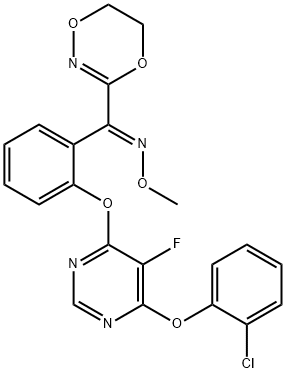
FLUOXASTROBIN
361377-29-9You may like
- fluoxastrobin
-
- 2026-07-14
- CAS:361377-29-9
- Min. Order: 1kg
- Purity: 99
- Supply Ability: 20tons